





Choosing between a blender and a mixer grinder can feel confusing. Both appliances chop and mix food, but they do not work in the same way. The right choice depends on what you cook, how often you cook, and the textures you want. This guide explains what each electrical appliance is, how they differ, and where each one fits in a modern kitchen. It also includes everyday use cases and a few reliable options if you are planning to buy.
What Is a Blender?
It’s a high-speed appliance, ideal for liquids and soft ingredients. Its rotating blades help achieve smooth textures. The great majority of models come with a tall jar and a lid. Many also have smaller cups for single servings. It works best with ingredients that are already wet and moist. Depending on the power of its motor and the design of its blades, it can also crush ice.
What Is a Mixer Grinder?
It’s made for wet blending and dry grinding, and it often includes several jars. Each jar has its own job, be it grinding spices or creating chutneys. The blades and jar shapes help it power through tougher ingredients.
A mixer grinder is a must-have for every home, and many homemakers look for a quality mixer that can do multiple tasks. It can handle dry ingredients with an almost negligible amount of liquid added.
Key Differences Between Blender and Mixer Grinder
When people compare blender vs grinder, they often focus only on speed. The real difference comes from use cases and design. Jar shape, blade type, and intended texture matter just as much.
Here are the most practical points that explain the difference between blender and mixer grinder:
|
Point of comparison |
Blender |
Mixer grinder |
|
Main purpose |
Designed mainly for blending liquids and soft ingredients into a smooth result |
Designed for both mixing and grinding, including dry and tougher ingredients |
|
Best output texture |
Smooth, pourable textures |
Wider texture range, from coarse to fine |
|
Dry ingredient handling |
Limited, and often needs some moisture to work well |
Handles dry grinding well (spices, grains, pulses) |
|
Typical jar setup |
Usually one tall jar, sometimes with a personal cup |
Usually, multiple jars for different tasks |
|
Blade style focus |
Optimised for fast blending and emulsifying |
Optimised for grinding, mixing, and paste-making across jar types |
|
Thick mixtures |
Can struggle with very thick pastes without added liquid |
More suited to thicker pastes and batters with better control |
|
Footprint and storage |
Often taller and needs more vertical space |
Often wider base, with extra jars to store |
Different Uses of Kitchen Blender and Kitchen Mixer Grinder
Both appliances are useful, but they shine in different tasks. If you plan around your usual recipes, the decision becomes easier. It also helps you avoid buying an appliance that stays on the shelf.
Blender Uses
Many people buy a kitchen blender for drinks and smooth mixes. It suits recipes that need a consistent liquid texture, and also saves time when you want quick breakfast preparations.
Practical blender uses in kitchen routines include:
-
Smoothies using fruit, milk, oats, or yoghurt
-
Soups after vegetables are cooked and softened
-
Pancake batter where a very smooth mix is preferred
-
Milkshakes and flavoured drinks
-
Pureeing baby food with cooked ingredients
A food blender is also convenient when you want an even texture without bits. This is helpful for some sauces and dressings.
Mixer Grinder Uses
Common uses of a mixer grinder include:
-
Grinding whole spices into fresh masala powders
-
Making ginger-garlic paste and curry bases
-
Grinding soaked lentils for batter
-
Preparing coconut chutney and thicker dips
-
Crushing nuts and seeds for cooking or toppings
Many buyers use the phrase mixer and grinder to describe this all-in-one role. It is also sometimes called a mixie grinder in everyday product searches, especially when comparing models online.
Blender vs Mixer Grinder: What Should You Choose?
Use these points to decide on a blender vs a mixer grinder for your home:
-
Choose a blender if you mainly make smoothies, soups, and liquid recipes, and you prefer very smooth finishes
-
Choose a mixer grinder if you cook often and want to grind spices, make pastes, and handle both wet and dry prep with one appliance
Consider noise control and base stability, particularly for high-speed grinding. If you are still unsure, list your top ten recipes and mark which appliance supports them better. This also makes the difference between a blender and a grinder feel more practical, not theoretical.
Milton's Top Picks for Mixer Grinder
If you want a reliable mixer grinder with strong daily performance, Milton offers several options designed for routine grinding and mixing. The models below share a focus on practical details, such as jar quality, stable feet, and durable body construction.
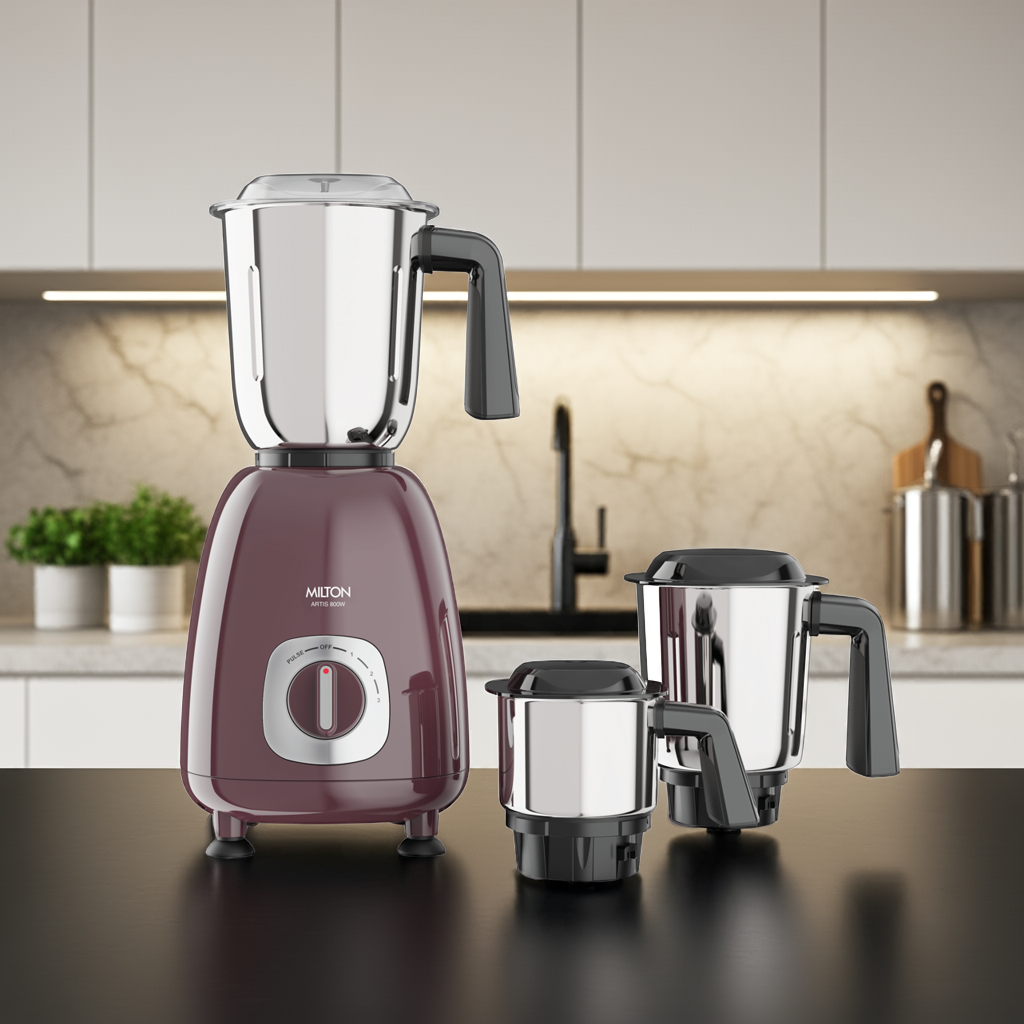
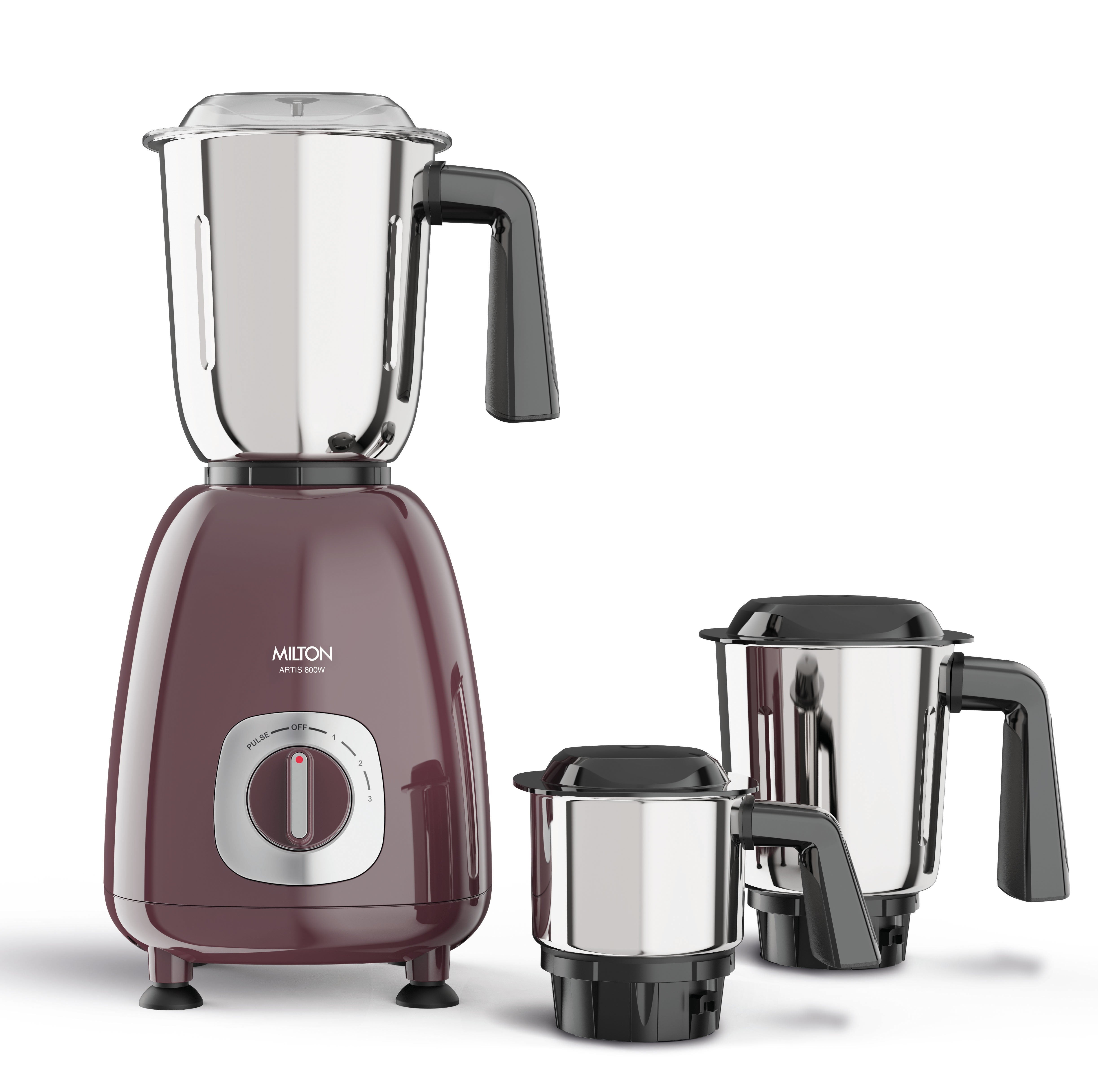
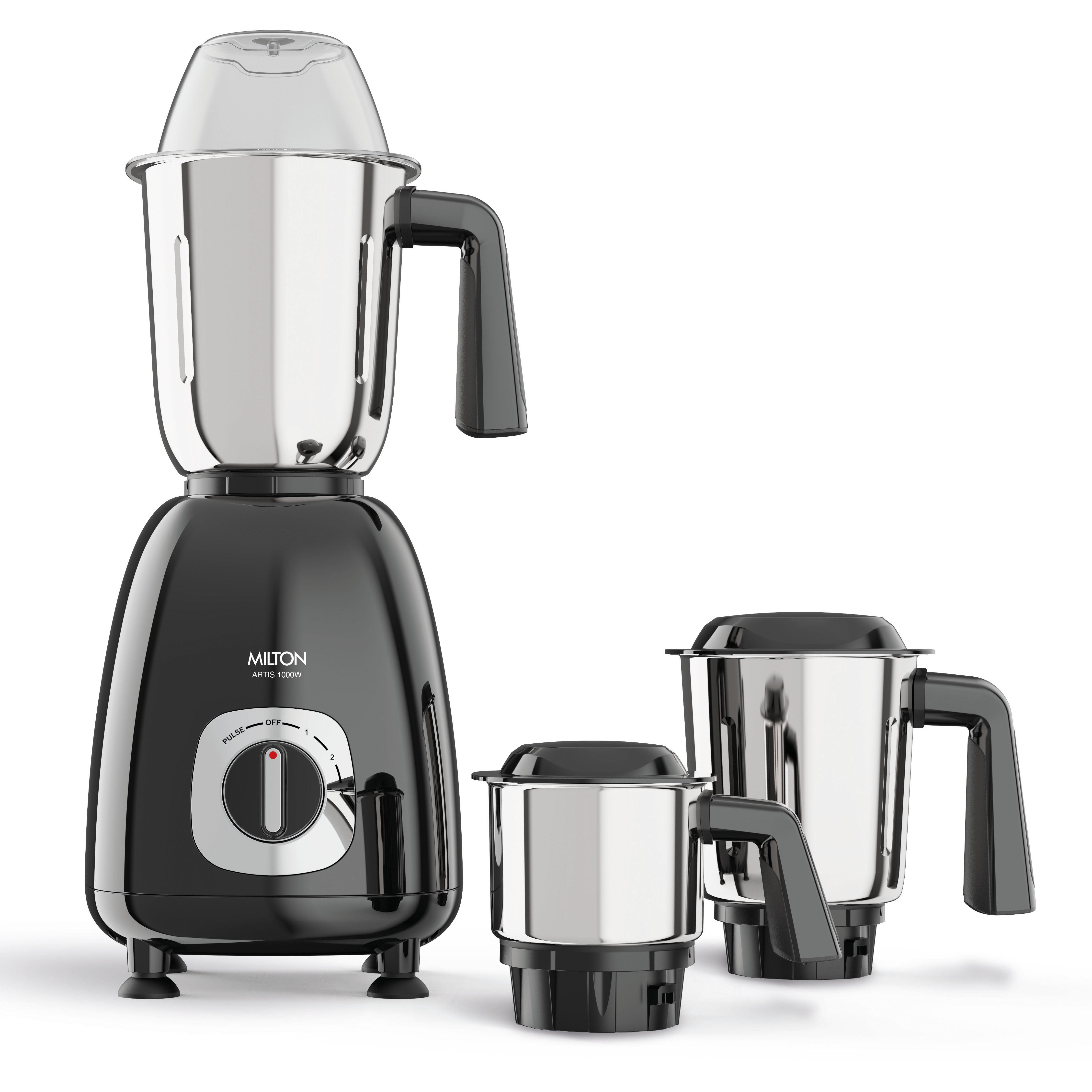
1) Artis Mixer Grinder
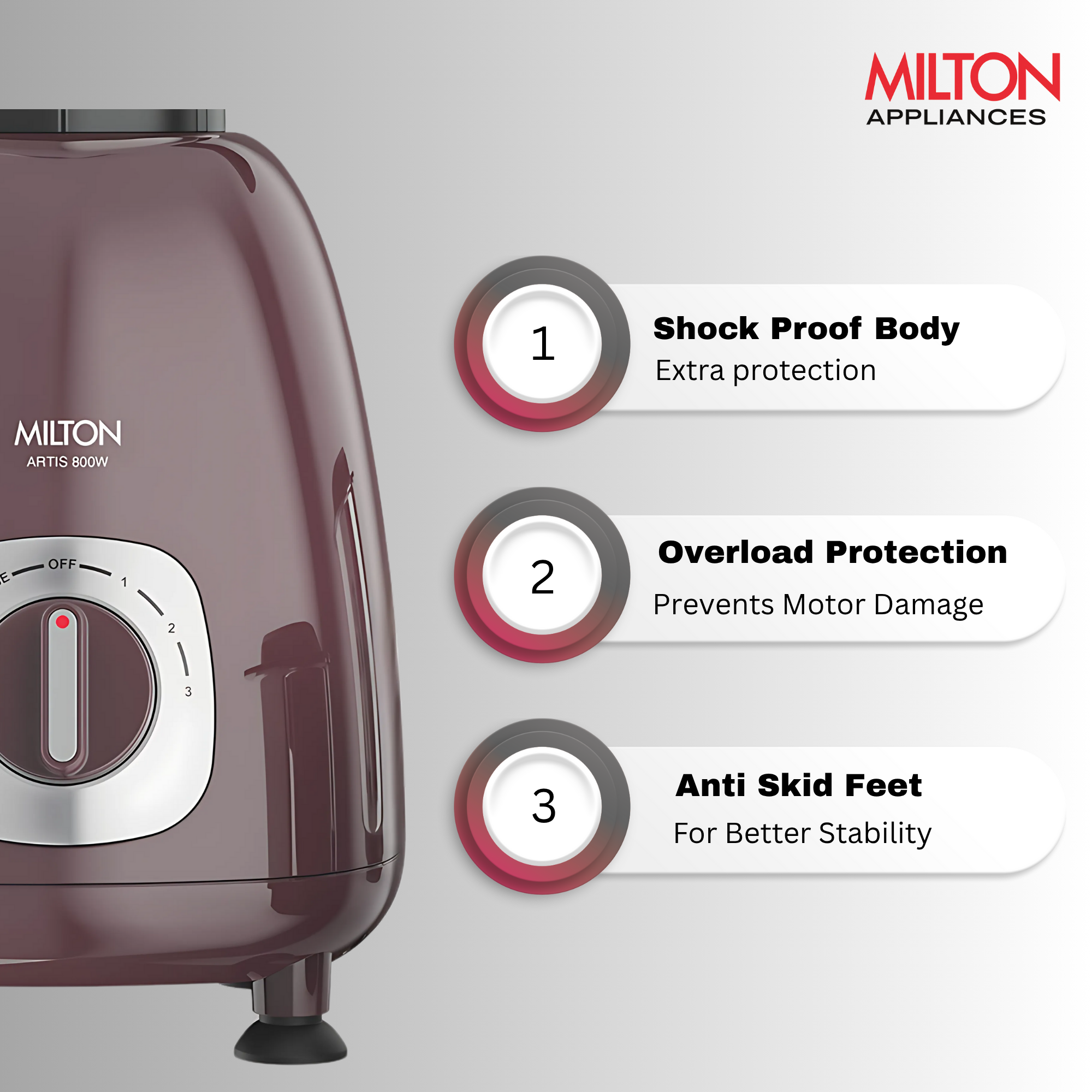
The Artis Mixer Grinder suits everyday preparations where you need reliable grinding and mixing. Its jar set is made from stainless steel that resists corrosion, and each jar is easier to lift and control during use. The outer build uses ABS and has a neat, glossy finish that looks clean on a worktop.
Key highlights:
-
Stainless steel jars designed to stay rust-free over time
-
Secure jar grips to support safer handling
-
A solid, single-piece style body with a quieter operating approach
-
A traditional-style grinding blade that supports classic textures
-
Base vents are designed to support smoother airflow during operation
-
Strong suction-style feet to help keep the unit steady
-
Control dial designed for comfortable turning, with a premium finish
2) Spire Mixer Grinder
The Spire Mixer Grinder is built for routine kitchen tasks, especially where you alternate between wet mixes and dry ingredients. It includes durable stainless steel jars and an ABS body that is made for regular use. The design also focuses on stable placement and reduced movement while grinding. Key highlights:
-
Rust-resistant stainless steel jars for daily grinding needs
-
Jar handles that improve balance while pouring or transferring
-
Polished monolith-style body with a design intended to lower noise
-
Grind-focused blade designed for traditional results
-
Bottom airflow support through a simplified vent layout
-
Vacuum-style feet that help the appliance stay in place
-
Smooth dial control with a chrome-finished housing
3) Neom Mixer Grinder
The Neom Mixer Grinder fits kitchens where you want a practical jar set for varied prep. The jars are made from stainless steel and are intended to stay free from rust with regular care. Its overall build and base design focus on steadier operation during frequent use.
Key highlights:
-
Stainless steel jars made for long-term kitchen use
-
Easy-grip jar handles for better control during mixing and pouring
-
Sleek monolith body styling with a finish that looks premium
-
Blade design aimed at classic grinding styles and textures
-
Simple underside venting is intended to support consistent performance
-
Strong base grip that helps reduce sliding during operation
-
User-friendly knob layout with an upgraded outer finish
4) Ascent Mixer Grinder
The Ascent Mixer Grinder is a sensible choice if you prefer a stable grinder with a design that keeps sound more controlled. It uses stainless steel jars and a monolith-style outer build with a glossy look. The base is designed to stay firm on the counter when you run tougher grinding tasks.
Key highlights:
-
Stainless steel jars that are made to resist rust
-
Noise-conscious build approach for a more comfortable kitchen setting
-
Premium monolith-style design with a clean, high-gloss finish
-
Traditional grinding blade to support familiar results
-
Underbody venting is designed as a single, simplified structure
-
High-grip vacuum feet to help prevent movement while running
-
Dial control shaped for easier everyday operation
Conclusion
If your meals are mostly drinks, soups, and smooth blends, a blender machine fits well. If your cooking involves spices, pastes, and dry ingredients, a mixer grinder supports a wider range of preparation tasks. Think about what you will use weekly, not just what sounds useful today.


