




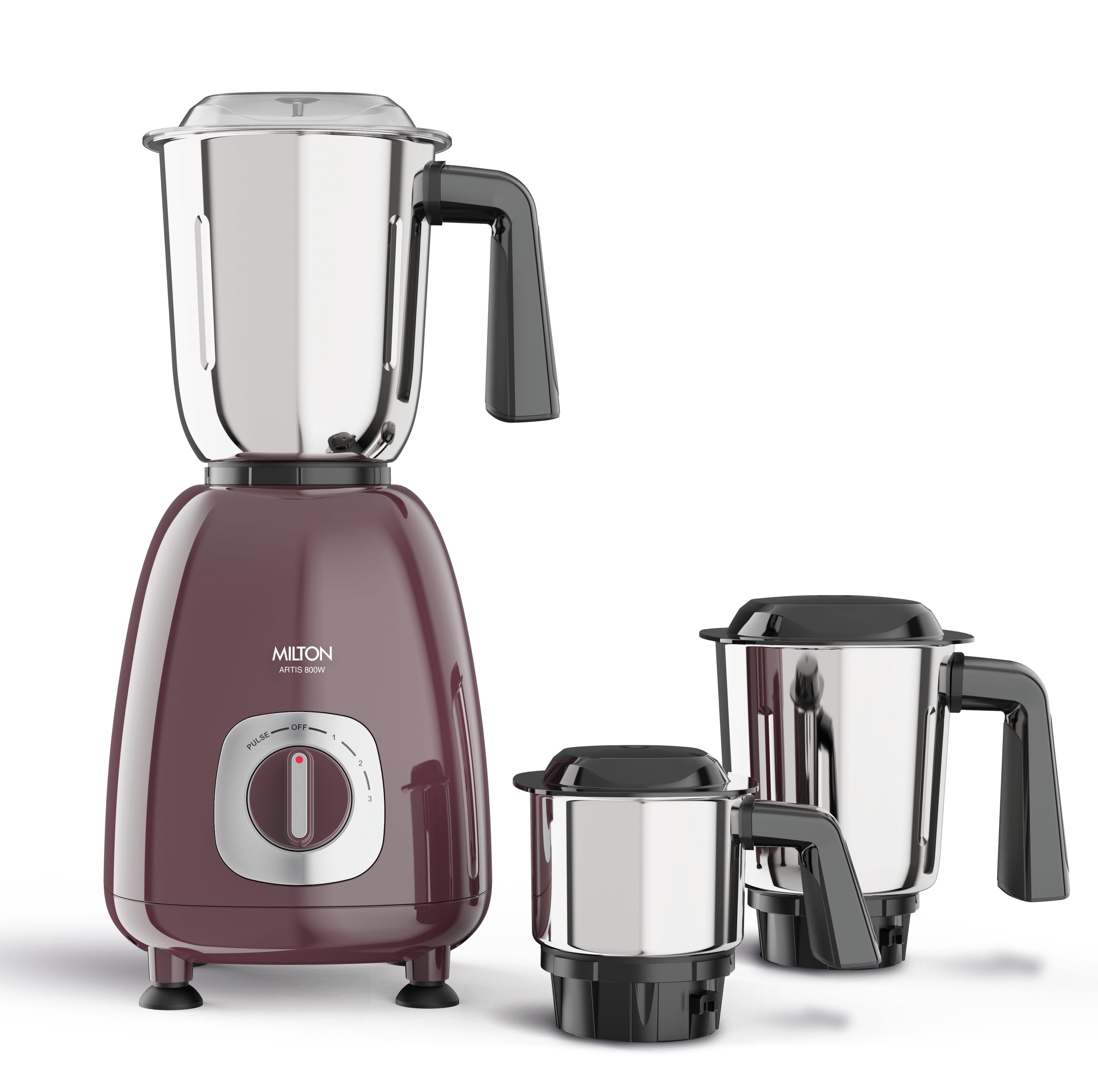



Many blending tasks in Indian cuisine do not require mixer grinders. Some examples of such blends include tomato puree, dal, soup, chutney, lassi, and gravy curry. One can do this using a hand blender without the need to transfer ingredients to any other container or wash any other kitchen appliance. It is especially useful if one is preparing food in small quantities.
The different uses of a hand blender make it an important tool to have in the kitchen. This guide covers how a hand blender works, its uses in Indian cooking, buying tips, safe use and cleaning.
What Is a Hand Blender and How Does It Work?
A hand blender is a slim appliance with a motor at the top and rotating blades at the bottom. You place the blade end inside a bowl, pan or jug and switch it on. The blades break down the ingredients as you move the blender through the mixture.
Unlike a mixer grinder, it comes to the food rather than making you transfer the food to the appliance. For everyday cooking, this means less transferring, fewer spills and one less jar sitting in the sink.
Why Is a Hand Blender Useful for Indian Cooking?
Indian recipes often need blending at different stages. You may want a smooth gravy for one dish and a slightly coarse texture for another. A hand blender makes it easier to stop at the texture you like.
It is also useful when you are cooking small portions. There is little point in taking out a large mixer grinder to blend one cup of cooked dal or a small bowl of chutney. This can make daily cooking easier.
A hand blender can help you:
-
Blend food directly in a suitable cooking vessel
-
Save time when preparing small quantities
-
Avoid transferring hot mixtures between containers
-
Control the final texture
-
Reduce the number of utensils used
Another important advantage is that it is extremely easy to learn how to use a hand blender.
10 Uses of Hand Blender for Indian Cooking
The hand blender's uses and functions bring a lot of convenience in the kitchen. This small tool can handle more everyday tasks than many people expect. Here are 10 practical ways to use it in an Indian kitchen.
1. Tomato Puree
Cooked or softened tomatoes can be blended into a smooth puree for gravies, sauces or marinades. It is useful when you need only a small batch.
2. Dal
If you like creamy dal, blend the cooked lentils for a few seconds. For a homely texture, do not overblend. You can leave some lentils whole.
3. Soups
One of the common electric hand blender uses is making smooth soups from cooked vegetables. Tomato, pumpkin, carrot, spinach and mixed vegetables can be blended directly after cooking, saving you the trouble of transferring them to another jar.
4. Chutneys
Small batches of mint, coriander, tomato or peanut chutney can be blended without using a larger mixer. Add a little water as needed and blend in short bursts.
5. Curry Gravy
Cooked onion and tomato bases can remain chunky. A quick blend can make the gravy more even. The function of hand blenders is particularly important for dishes where you want a smoother finish.
6. Raita
A brief blend can help combine curd with herbs, cucumber or other soft ingredients. Use a low speed and avoid blending for too long if you want the raita to stay thick.
7. Lassi and Chaas
Curd, water and spices can be mixed quickly for a glass or two of lassi or chaas. It is convenient when you do not want to use a larger appliance. Making these delicious beverages during the summer months is one of the most important uses of hand blender in Indian kitchens.
8. Baking Preparation
One of the useful hand mixer uses in baking is whisking and mixing ingredients for cakes, muffins and other baked treats. Depending on the model and attachment, it can help combine eggs, butter, sugar and other ingredients to create a smoother batter with less manual effort.
9. Marinades and Sauces
Soft herbs, yoghurt, cooked ingredients and liquids can be blended into an even marinade. It helps distribute spices and herbs through the mixture.
10. Baby Food and Purees
The use of a hand blender in kitchen is also important for mashing baby food. Cooked vegetables, dal and other soft foods can be turned into a smoother puree. Always check the temperature and texture before serving.
How to Choose the Right Hand Blender for Indian Cooking?
Do not pick a hand blender simply because it has the highest wattage. Think about what you actually cook. Think about your usual recipes, not just the feature list.
So, what is the best hand blender? Keeping these points in mind will help you find the best one:
-
Power: Thicker mixtures need a motor suited to regular blending.
-
Speed settings: Variable speeds help with different textures.
-
Blade quality: Stainless steel blades are a practical choice.
-
Grip: The handle should feel secure, especially with hot food.
-
Attachments: A whisk can be useful for other kitchen tasks.
-
Cleaning: Detachable parts are easier to wash and store.
-
Build quality: Look for a sturdy body and well-fitted attachments.
-
Warranty: Check warranty and service support before buying.
Tips for Using a Hand Blender Safely and Effectively
Learning how to use a stick blender makes kitchen tasks a lot easier. Here are a few tips to remember:
-
Put the blade into the mixture before switching the appliance on.
-
Start at a lower speed, then increase it if needed.
-
Keep the blade covered by the mixture to reduce splashing.
-
Use a deep container for liquids.
-
Take extra care with hot soups and gravies.
-
Do not put the motor section under water.
-
Unplug the appliance before changing attachments.
-
Do not force the blender through very hard ingredients.
-
Give the motor a break during long blending sessions if the manual recommends it.
How to Clean and Maintain a Hand Blender?
Clean the blender soon after use. Food stuck around the blades becomes harder to remove once it dries. The basic routine is very simple:
-
Unplug the blender after use.
-
Remove the detachable blending shaft, where applicable.
-
Rinse the blade area soon after blending.
-
Wash removable parts with mild washing-up liquid and a soft sponge.
-
Wipe the motor body with a damp cloth.
-
Dry washable parts before storing.
-
Check the blade area for food residue.
-
Follow the manufacturer's instructions for dishwasher use, if applicable.
Do not immerse the motor unit in water. Avoid abrasive scrubbers that can damage the surface or attachments.
Conclusion
A hand blender can be used for multiple recipes in the kitchen. It can help with dal, gravies, chutneys, soups, drinks and purees without making the kitchen feel crowded with electrical appliances. Choose one based on your cooking habits, handle it carefully and clean it after use. Used properly, it can become a simple tool you reach for several times a week, especially when you need quick results.


